
Considering couples counselling can bring up a mix of hope and nerves. You might be wondering what actually happens in the room, how the process works, and whether it can make a real difference for your
relationship. At Sojourn Counselling and Neurofeedback in Surrey, BC, we aim to make that first step feel clear and supportive. Here is a friendly walk-through of what you can expect, how counselling helps, and how to
choose the right therapist for you and your partner.
What happens at couples counselling?
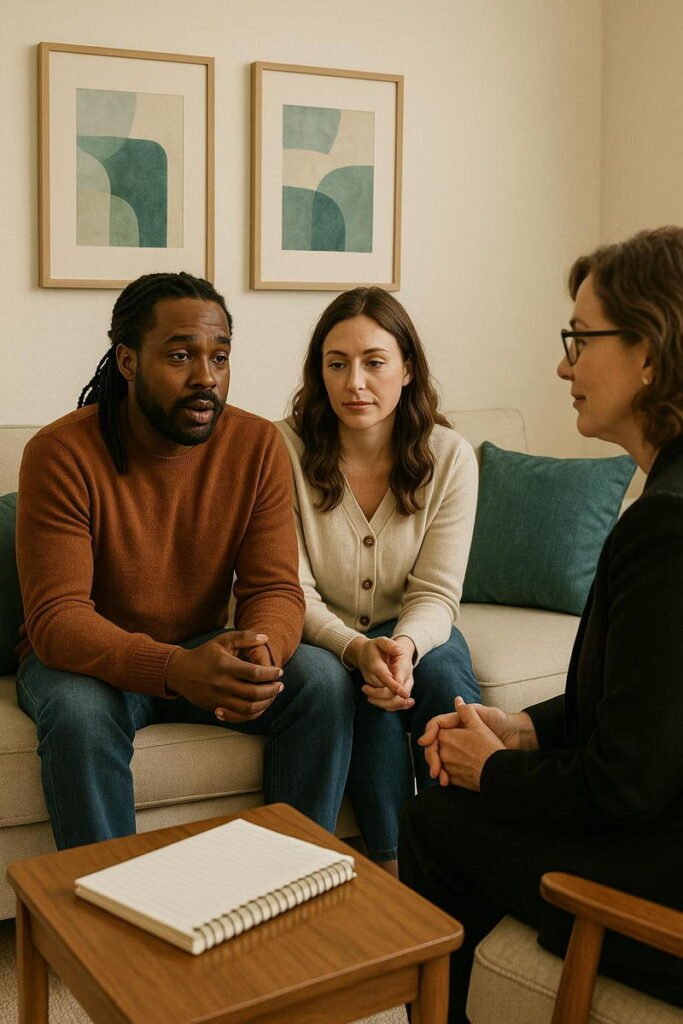
Your first sessions focus on understanding your relationship, not on deciding who is right or wrong. The therapist’s job is to create a safe, respectful space where each of you can speak honestly and feel heard. Sessions
typically include:
- Welcome and housekeeping: You will review confidentiality, session structure, goals, and what to do if things feel heated. This sets the tone for safety and collaboration.
- Sharing your story: Each partner has time to describe the challenges as they see them. Common concerns include communication breakdowns, repeated arguments, emotional distance, breaches of trust,
parenting stress, or life transitions. - Mapping the pattern: Your therapist will listen for the cycle that keeps you stuck. For example, one of you may pursue conversation when upset while the other shuts down to keep the peace. The cycle, not either
person, becomes the problem you tackle together. - Setting goals: You will identify practical aims such as fair fighting guidelines, rebuilding trust, improving intimacy, or learning tools to de-escalate conflict in the moment.
- Skill-building and emotional work: Early exercises often focus on slowing down conversations, using “I” statements, and reflecting what you heard before responding. Many couples benefit from learning to name
softer, underlying emotions like hurt, fear, or loneliness. These feelings often sit beneath anger or defensiveness and are key to reconnecting. - Homework between sessions: Simple check-ins, brief connection rituals, or communication scripts help you practice new patterns at home. Counselling sessions are the lab, your home life is where gains are
consolidated.
At Sojourn, we frequently use Emotionally Focused Therapy, a well-researched approach for couples. EFT helps you understand and change your negative cycle while building secure emotional connection. If relevant,
your therapist may also suggest individual support to address personal stress, trauma, or mental health concerns that affect the relationship.
The therapist’s role
A couples therapist is a guide and facilitator. You can expect your counsellor to:
- Keep you both emotionally safe while discussing hard topics.
- Slow down the conversation so each person feels understood.
- Translate reactive moments into clearer needs and feelings.
- Offer practical tools to use between sessions.
- Help you repair ruptures when things go sideways.
Your therapist does not take sides, deliver verdicts, or tell you who is right. Instead, they help you both get to the heart of the matter and practice connecting in new ways.

How effective is couples counselling?
Couples counselling is highly effective when you engage consistently, practice skills between sessions, and address the deeper emotional patterns beneath the fights. Research on Emotionally Focused Therapy shows
strong outcomes for many couples seeking improved connection and reduced conflict. In our experience, the couples who benefit most:
- Show up regularly and commit to a shared goal.
- Stay curious, even when frustrated.
- Practice small connection habits at home, such as daily check-ins or appreciation.
- Are open to understanding the other person’s emotional world, not just the facts of the disagreement.
It is normal to feel worse before you feel better, especially as you start naming hard truths. A good therapist works at a pace that feels manageable, teaches you grounding tools, and helps you repair quickly when a session
stirs things up.
Can couples counselling fix a relationship
Counselling can change patterns, rebuild trust, and deepen closeness, though no therapist can promise a specific outcome. What counselling can do is give you structure, support, and proven tools to:
- Communicate more honestly and respectfully.
- Understand the cycle that fuels conflict.
- Rebuild emotional safety after hurts or distance.
- Make clear decisions about your future together.
Sometimes, therapy also clarifies that separation is the healthiest next step. In those cases, counselling still offers value, helping you navigate the process with care, especially when children or extended family are involved.
Your therapist will meet you wherever you are, with respect for your values and goals.
What kind of therapist is best for couples?
Look for a counsellor with training in recognized couples modalities, such as Emotionally Focused Therapy, and experience working with issues similar to yours. In British Columbia, working with a Registered Clinical
Counsellor provides assurance of training, ethics, and supervision standards. If you are wondering about credentials and roles, you might find this article on what is a clinical counsellor helpful.
Other good signs you have the right fit:
- You both feel heard and respected.
- The therapist explains concepts clearly.
- The pace feels safe and steady.
- You leave sessions with hope and a plan.
If trauma, PTSD, anxiety, or neurodiversity play a role in your relationship, choose someone who offers trauma-informed care and can work collaboratively with individual therapy when needed.
How Sojourn supports couples
At Sojourn, our couples therapists integrate empathy with evidence-based methods. We tailor sessions to your goals, whether that is repairing after infidelity, reducing conflict, parenting as a team, or rekindling closeness.
Many couples start with weekly sessions, then shift to biweekly as new skills take hold.
For couples in Surrey and across BC, you can meet in person or online. If you are seeking local support, explore couples counselling surrey bc to learn more about our approach and booking options. If you are looking for
a trusted professional standard, you can also read about our clinical counsellor team and what that means for your care.
Tips to make the most of counselling
- Agree on a shared goal before your first session, even if it is as simple as “fight less and feel closer.”
- Keep a note of triggers or recurring topics. Bring examples to sessions.
- Practice one small skill each week, such as reflective listening or a 10 minute daily check-in without screens.
- Celebrate small wins. Change is built on repetition, not perfection.
- Tell your therapist what helps you feel safe, and what does not. Feedback shapes better sessions.

When individual support helps
Sometimes one or both partners carry unresolved trauma, anxiety, or depression that influences reactions in the relationship. In these cases, individual therapy alongside couples work can speed up progress. Our team
provides individual counselling for concerns like anxiety, PTSD, and stress, and can coordinate care so you feel supported on all fronts.
The bottom line
Couples counselling is not about keeping score. It is about understanding the pattern that hurts both of you, then learning to turn toward each other with clarity and care. With the right therapist, clear goals, and practice
between sessions, many couples experience less conflict, more safety, and a stronger bond.
If you are ready to begin, we would be honoured to help you take that first step. Learn more about couples therapy surrey bc, meet a clinical counsellor, and book a time that works for both of you. Change is possible, and it
can start with one honest conversation.